
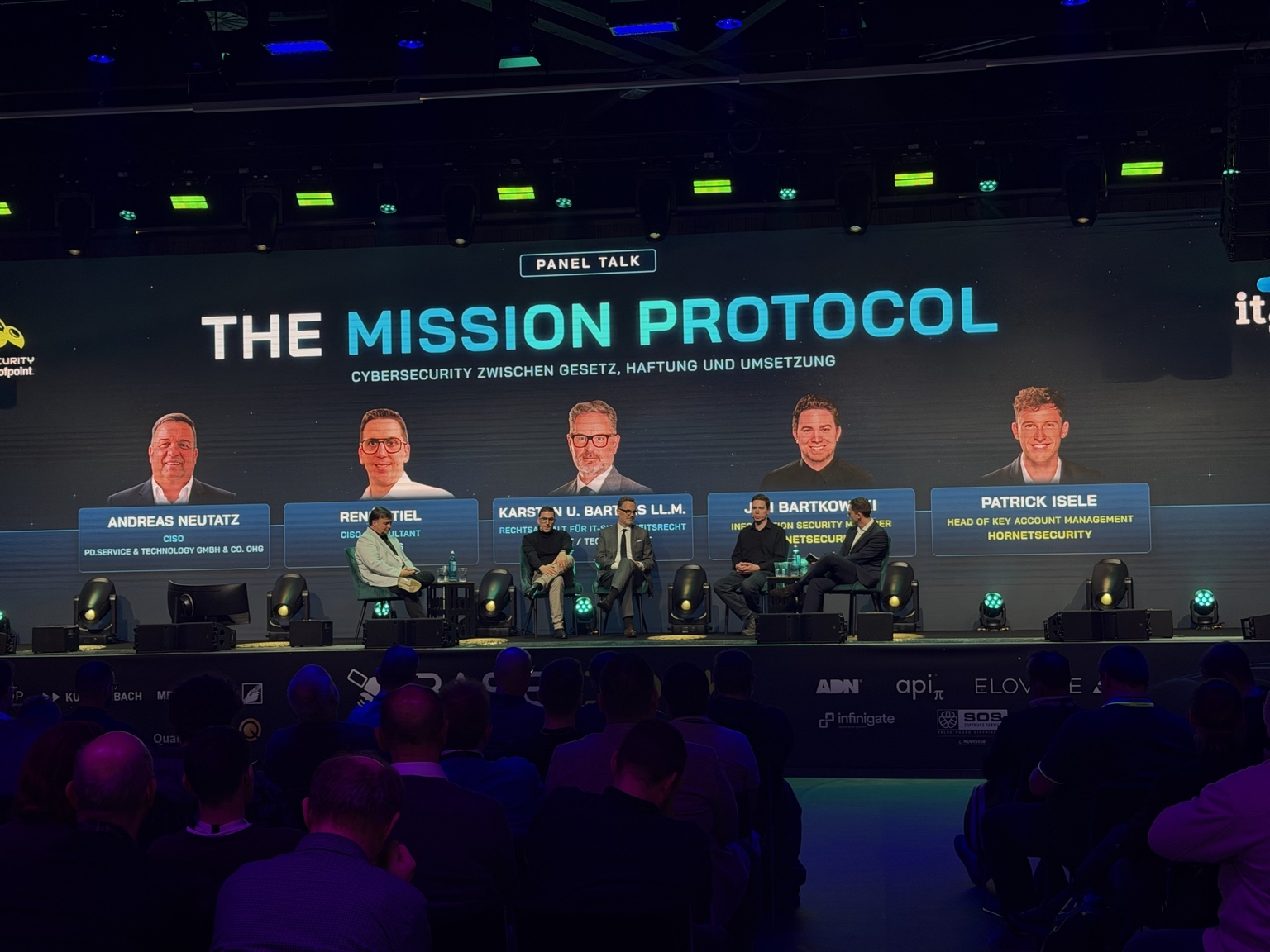
Cognivox Labs attended it-sa Expo&Congress 2026 as a visitor. Held from 27 to 29 October at NürnbergMesse in Nürnberg, Germany, the event brought together cybersecurity professionals, technology providers and organisations exploring the latest developments in IT security.
As a software and AI engineering company based in Nürnberg, the event provided an opportunity to explore how cybersecurity requirements are evolving alongside the increasing adoption of AI, cloud infrastructure, connected applications and automated business processes.
Across the exhibition and technical sessions, several subjects were particularly relevant to our work: AI-assisted security operations, identity and access management, secure application architecture, and the challenges of integrating intelligent systems into existing digital environments.
Cybersecurity across an increasingly connected technology landscape
The exhibition brought together technologies spanning network and cloud security, identity protection, threat intelligence, security operations, infrastructure resilience and enterprise data protection.
The exhibition areas of companies such as Cisco, Palo Alto Networks, Cloudflare and NTT DATA reflected the breadth of the cybersecurity market, from infrastructure-level protection to the security of modern applications and business environments.
The Startups@it-sa area also highlighted the role of emerging companies developing specialised approaches to cybersecurity challenges.
For organisations developing or modernising digital platforms, security is no longer a consideration that can be isolated from the underlying software architecture.
Applications increasingly depend on interconnected APIs, third-party services, cloud environments and automated workflows. Understanding how these components interact, exchange data and enforce permissions is essential to building reliable systems.
AI and automation in security operations
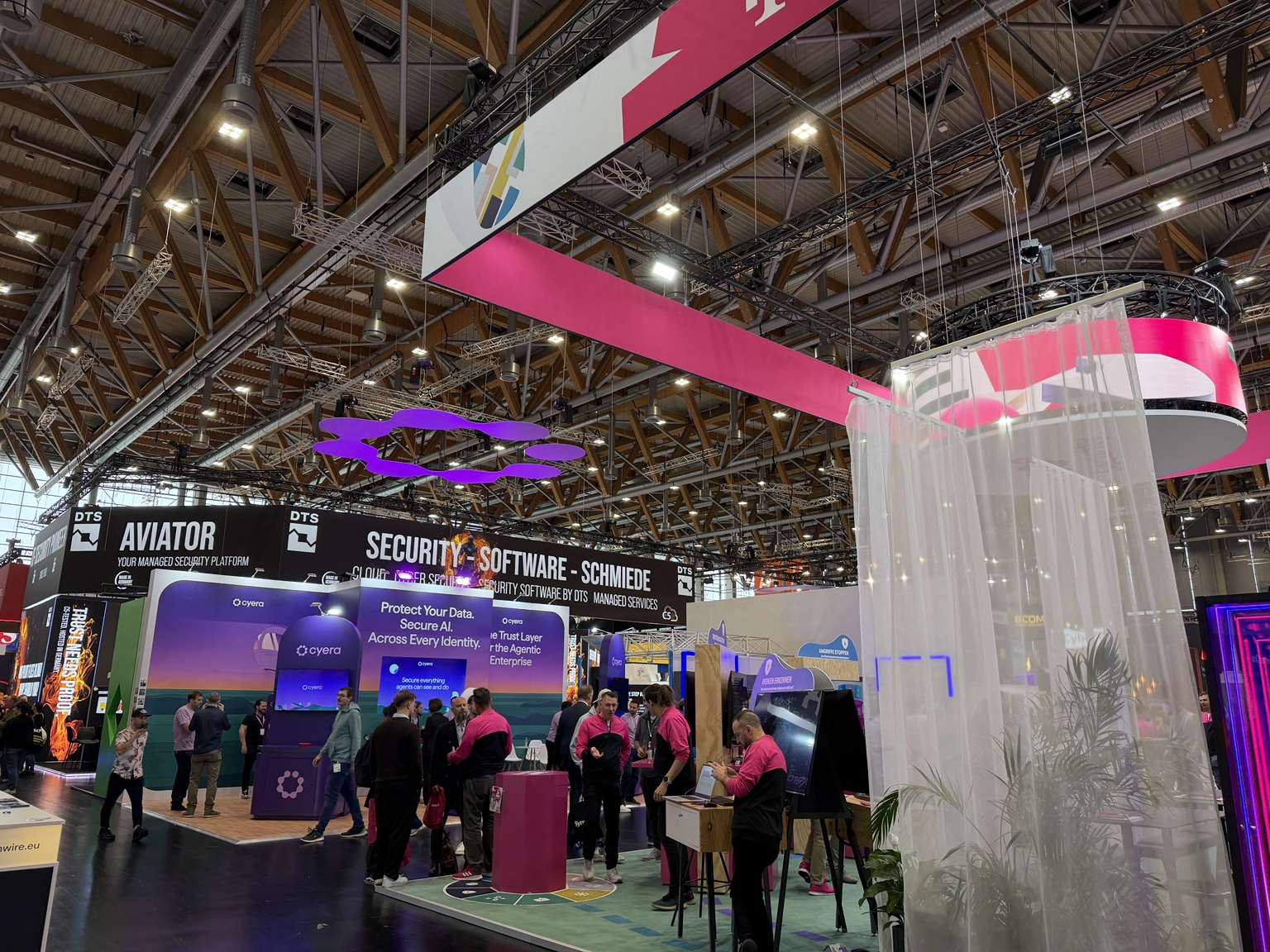
One of the technical presentations we attended at Hornetsecurity's BASE DOCK explored how AI and LLM-based workflows are being applied to security operations.
The presentation covered approaches to threat analysis and classification, including sandbox-based investigation, threat intelligence, automated processing and analyst involvement.
Hornetsecurity also presented its SARA threat event management platform, illustrating how contextual information, tools and AI-assisted processing can contribute to managing reported security events.
An important aspect of this approach is the relationship between automation and human investigation.
Intelligent systems can help process repetitive tasks, organise information and support the prioritisation of security events. However, their effectiveness depends on the quality of the underlying detection mechanisms, available context, validation procedures and operational controls.
For software engineers, this raises practical questions about integrating AI with established systems while maintaining predictable workflows, traceability and clear responsibilities.
Protecting identity and permissions in AI-enabled applications
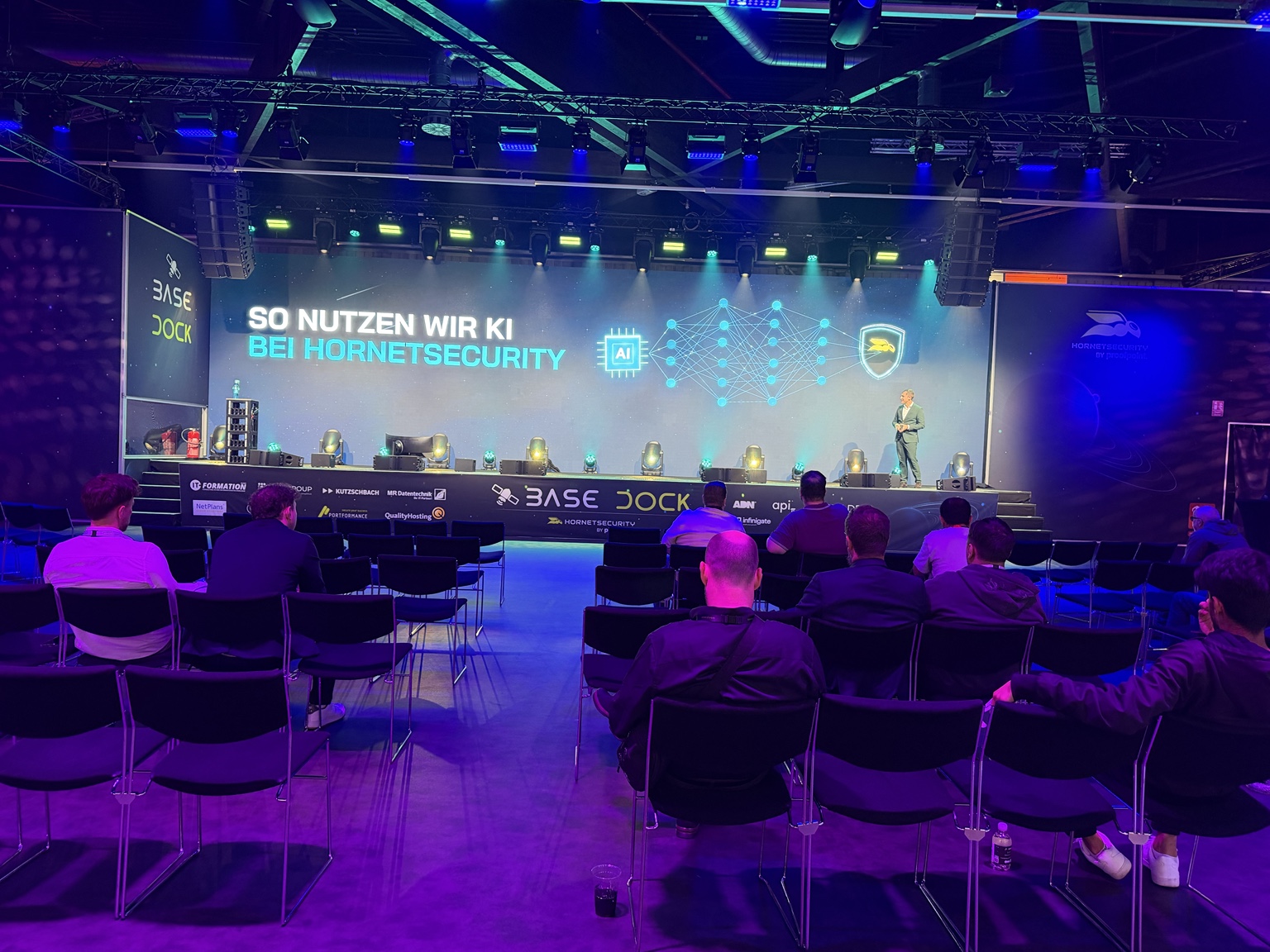
Another particularly relevant presentation took place at it-sa Knowledge Forum F.
Presented by Marc Bütikofer of Ergon Informatik AG, in a session sponsored by Airlock, it examined how introducing AI assistants into existing applications can create new security challenges.
The presentation used a customer portal scenario involving secure authentication, identity verification and an AI-powered chatbot.
Although the application initially maintained a strong identity and authentication process, the integration of an AI assistant introduced another possible access path to backend systems.
A document containing malicious instructions could influence an assistant that processes untrusted content. If the assistant subsequently accesses backend APIs using an overly privileged service account, existing identity and authorization boundaries may be undermined.
This is an important distinction for developers building AI-enabled business applications.
A secure authentication process does not automatically guarantee that every subsequent action performed by an AI agent is properly authorized.
AI tool access, backend permissions, user context, and approval mechanisms must be considered as part of the application architecture.
Official session details: Anna’s identity chain and the chatbot
Security, accountability and digital resilience
Beyond AI-specific challenges, the event also reflected the broader responsibilities involved in protecting digital infrastructure and business operations.
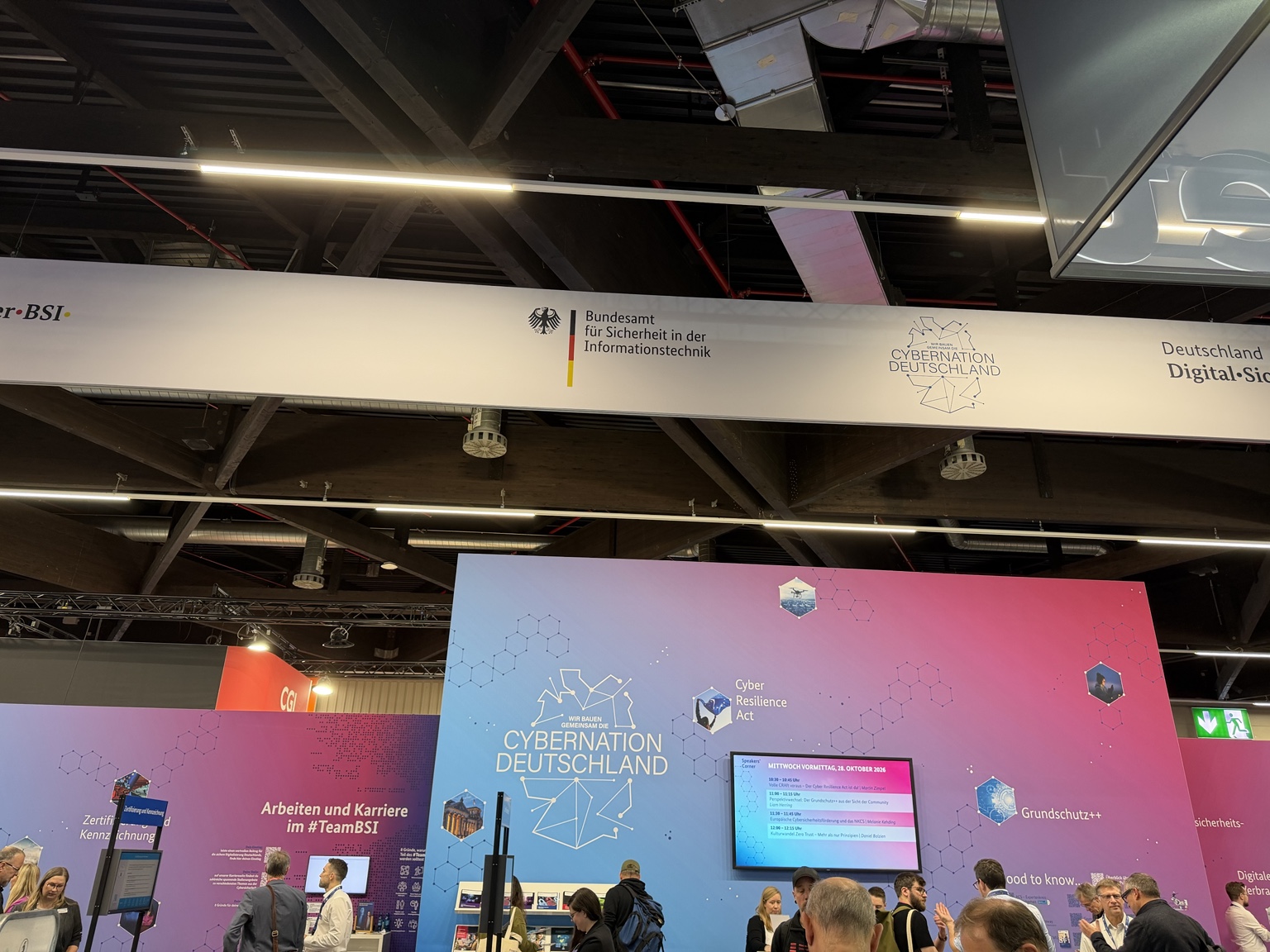
The presence of the German Federal Office for Information Security (BSI), alongside initiatives such as Cybernation Deutschland, demonstrated the importance of cybersecurity within Germany's wider digital ecosystem.
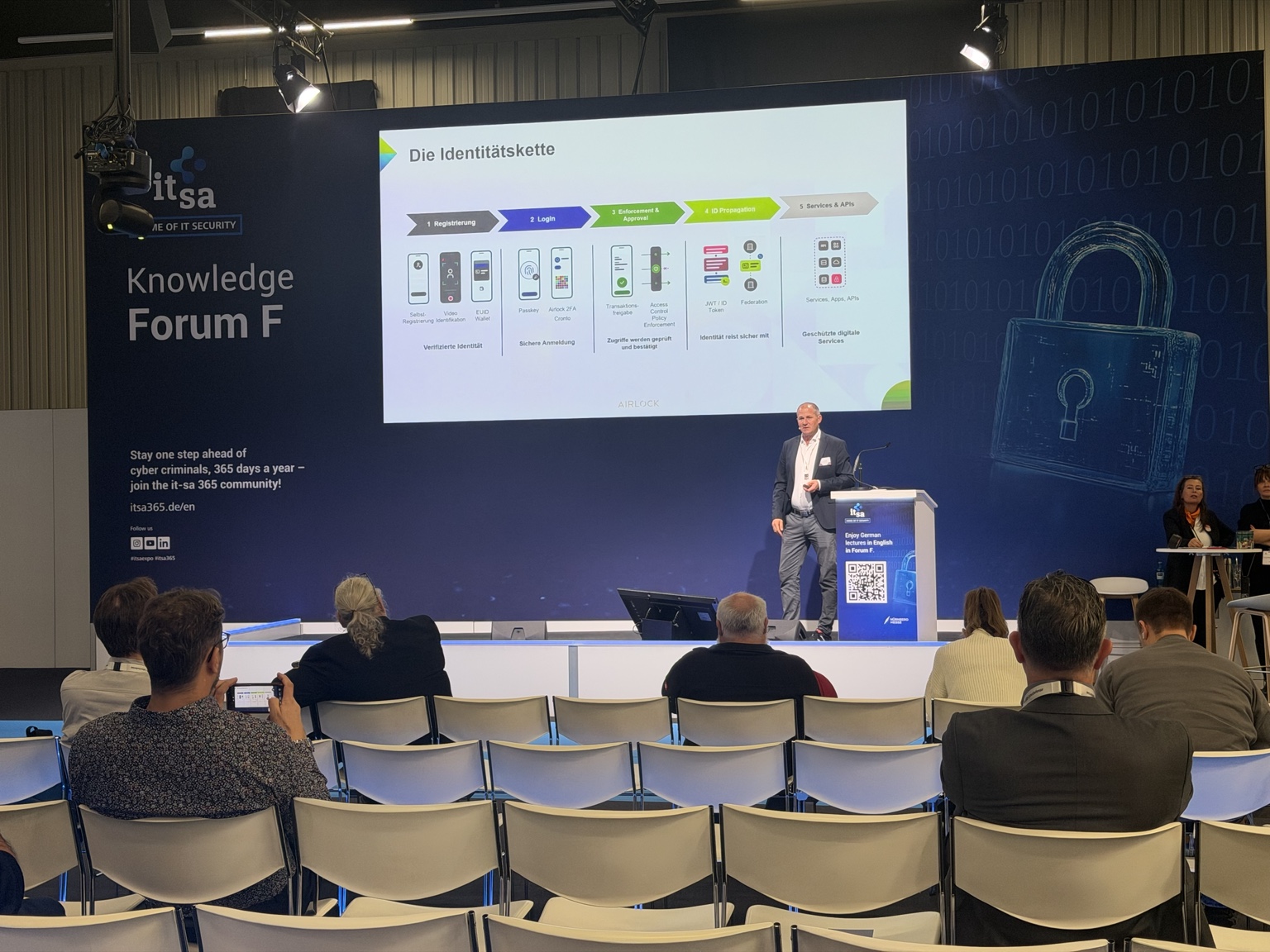
The event programme also addressed the relationship between cybersecurity regulation, liability and practical implementation, including the panel titled "The Mission Protocol: Cybersecurity zwischen Gesetz, Haftung und Umsetzung."
These subjects are relevant to organisations developing and operating digital platforms, where technical safeguards, operational processes, accountability and regulatory obligations increasingly intersect.
Secure software development requires more than choosing the right security tools. It also involves understanding system dependencies, managing access, keeping infrastructure maintainable and establishing appropriate controls throughout a system's lifecycle.
What this means for Cognivox Labs
For Cognivox Labs, the event reinforced the importance of treating security as an integral part of software and AI engineering.
Our work spans custom software platforms, backend and API development, RAG-based knowledge systems, AI integrations, intelligent workflows and cloud infrastructure.
Across these areas, security considerations influence how systems authenticate users, control access to information, expose functionality through APIs, process untrusted input and execute automated actions.
This becomes particularly important when AI agents are introduced into business processes.
An AI model may be responsible for interpreting information or proposing an action, but the surrounding application must independently enforce permissions, validate operations and determine which actions can be executed.
The goal is not simply to make software more intelligent. It is to ensure that intelligent functionality can be integrated into dependable, maintainable and appropriately controlled systems.
Our participation at it-sa 2026 provided useful perspectives on these challenges and on the technologies being developed across the cybersecurity industry.
We look forward to exploring the architectural implications of secure AI integration in a separate technical article.