
CASE STUDY · AGRICULTURE · FERTILIZER DISTRIBUTION
Digital transformation for
NR Agribusiness
An end-to-end digital transformation engagement for a Sri Lankan fertilizer business, connecting its website, product catalogue, content operations, production infrastructure, and social publishing.
THE DELIVERY
What was delivered
Cognivox Labs handled delivery end-to-end: website strategy, UI/UX design and development, Sanity CMS, infrastructure, deployment, security, SEO, and content automation. The result connects how NR Agribusiness presents its products, manages content, and shares updates.
Website strategy, design and development
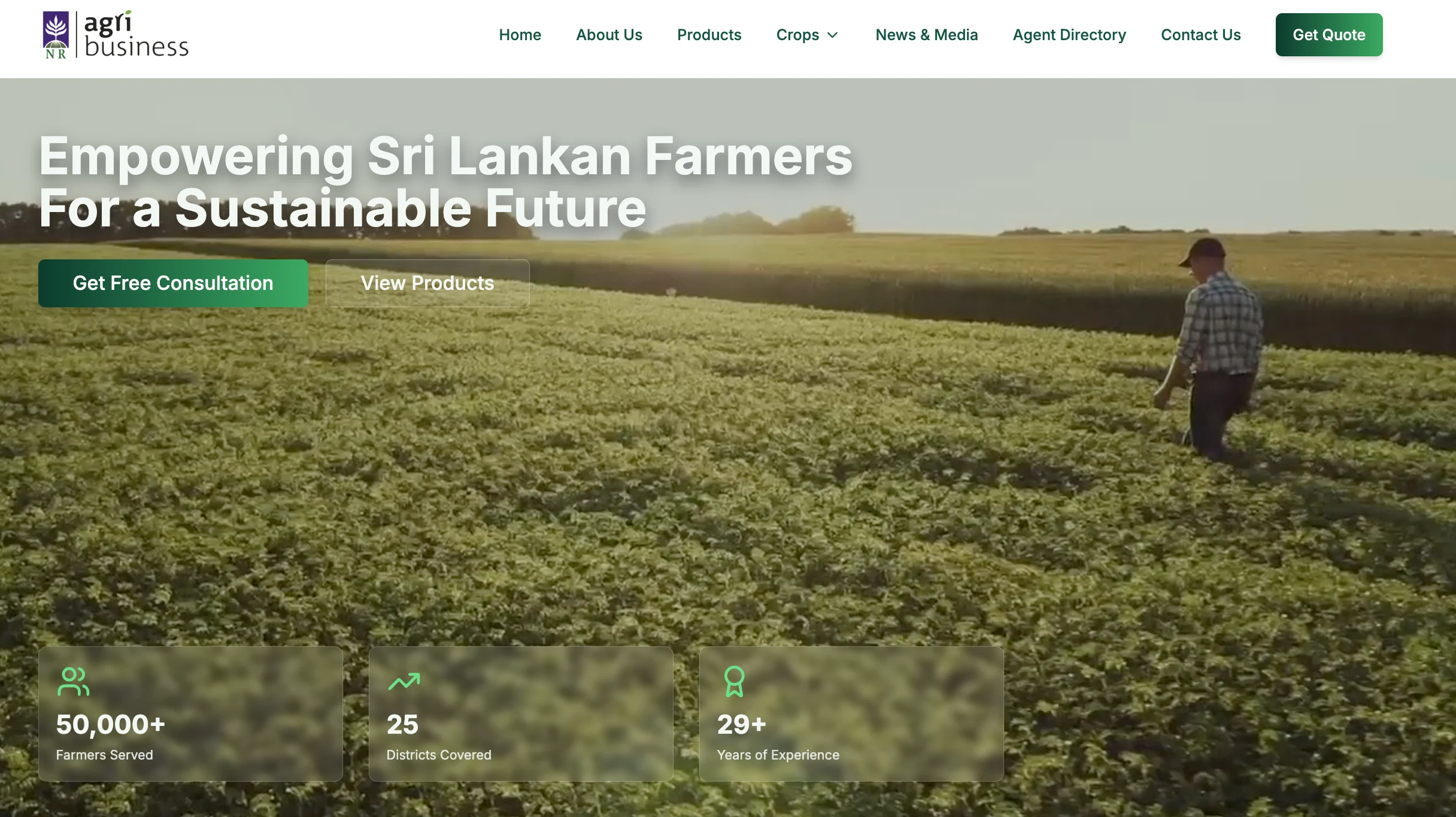
Website strategy, UI/UX design, and responsive development aligned with the company, its products, and agricultural customers.
Structured product catalogue
Product information organised into a scalable catalogue structure that can grow as the company expands its portfolio.
Sanity CMS
Sanity CMS setup and content architecture for maintaining products, pages, and blog articles without routine code changes.
SEO foundation
Technical and on-page foundations designed to make the website understandable, indexable, and ready for long-term search visibility.
Production infrastructure
Domain and DNS configuration, hosting setup, production deployment, website security configuration, and a CI/CD pipeline for repeatable releases.
Connected content operations
Integration of NR Agribusiness social channels and an automated workflow that turns newly published blog articles into social media posts.
BUSINESS CONTEXT
Why this project mattered
NR Agribusiness is an established fertilizer distributor serving Sri Lanka's agricultural sector.
The business had grown through its products, distribution network, and industry relationships, but its owned digital presence did not yet reflect the scale or maturity of the company.
The engagement brought together business presentation, product information, content publishing, and social channels in one managed digital presence.
A stronger digital foundation for an established real-world business.
THE CHALLENGE
What needed to improve
The company needed more than a visual refresh. Its digital presence needed a structure that could support real business information and continue evolving over time.
Limited owned digital presence
The company's online presence did not fully represent its products, capabilities, and position in the agricultural sector.
Product information needed structure
A growing catalogue required a clearer way to organise and present product information digitally.
Content needed to be maintainable
Routine product and website updates needed to be manageable through a content system rather than depending on code changes.
Publishing needed a connected workflow
Website content and social channels needed to work together as part of ongoing content operations.
THE TRANSFORMATION
Building the digital foundation
Website strategy and UI/UX design shaped the customer experience. Structured product data, Sanity CMS, production infrastructure, SEO, and content automation connected that experience to the work of maintaining and publishing business information.
Business needs
Understand the company, products, users, and information structure.
Digital experience
Design and build the responsive customer-facing website.
Product catalogue
Structure product information into a scalable digital catalogue.
Sanity CMS
Set up content management and connect newly published blog articles to automated social post creation.
SEO foundation
Establish technical and content foundations for search discoverability.
Production infrastructure
Configure the domain, DNS, hosting, website security, and CI/CD pipeline, then deploy the platform.
CONTENT INFRASTRUCTURE
Structured content and connected publishing
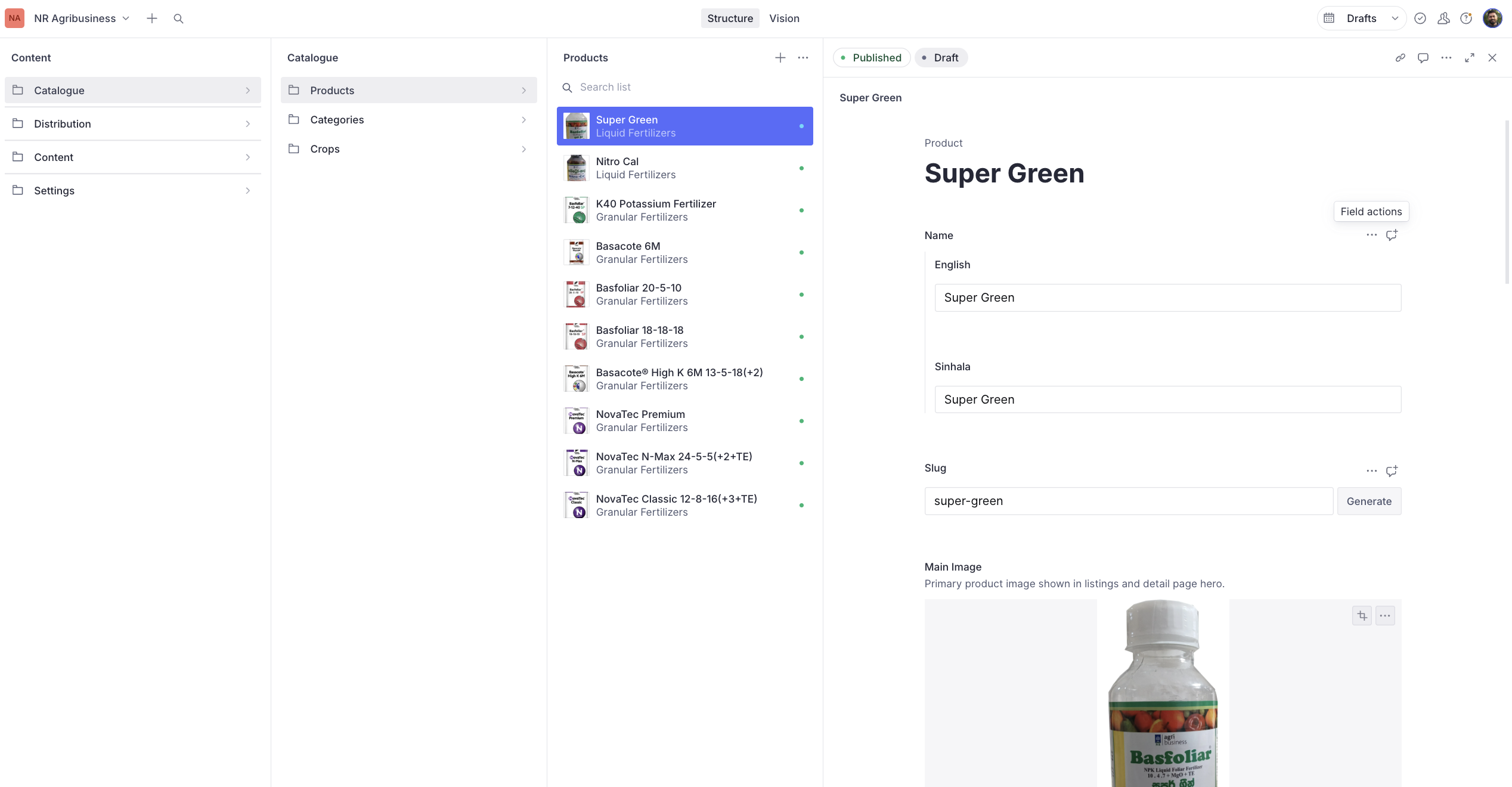
We set up Sanity CMS and its content architecture to manage products, website content, and blog articles in a structured environment.
Products are organised by categories and crops, with fields for multilingual names, imagery, descriptions, and catalogue information. Routine content updates can be handled independently of application code.
We linked the company’s social channels and delivered an automated workflow that turns newly published blog articles into social media posts. This connects website publishing with social content operations.
THE OUTCOME
What this enabled
NR Agribusiness has a deployed platform for presenting products, maintaining content, and turning newly published articles into social posts, with the infrastructure and publishing workflow delivered together.
Stronger digital presence
A professional owned platform that better represents the company, its products, and its position in the market.
Structured product information
A clearer digital catalogue foundation for organising and presenting a growing product portfolio.
Easier content management
Product and website content can be maintained through a structured CMS rather than routine development work.
Search-ready foundation
Technical SEO and structured content provide a stronger starting point for long-term organic visibility.
Production-ready infrastructure
The live platform has configured hosting, domain and DNS, website security, and a CI/CD pipeline for repeatable deployment.
Automated content distribution
Newly published blog articles become social media posts through an automated workflow connecting the website and social channels.
LET'S BUILD WHAT'S NEXT
Ready to build a stronger digital foundation?
We help businesses turn fragmented digital processes and ideas into structured, scalable software systems built around how they actually operate.