

How can public administration make better use of AI while maintaining control over sensitive data, infrastructure and existing digital processes?
This was one of the central questions explored by Cognivox Labs at Smart Country Convention (SCCON) 2026, held from 13 to 15 October at Messe Berlin.
Through discussions with GovTech providers, startups, public-sector representatives and infrastructure specialists, we explored the technologies and engineering challenges involved in modernising public services, integrating AI and developing more connected digital environments.

Digitalising Public Administration
An important part of our conversations focused on the continued digitalisation of citizen-facing administrative processes in Germany.
Discussions with representatives from the digital ministry highlighted the importance of improving existing digital services and ensuring that new technologies can integrate with established administrative systems.
Beyond digitising individual processes, another area of particular interest was how AI could support public employees in their daily work.
Public organisations often manage substantial amounts of information across regulations, documents, internal knowledge bases and disconnected systems.
Retrieval-Augmented Generation (RAG) offers one approach to making this information more accessible by allowing AI systems to retrieve relevant content from approved organisational sources.
Combined with appropriate evaluation, source verification and human oversight, these systems can help reduce unsupported AI-generated responses and support more reliable information retrieval.
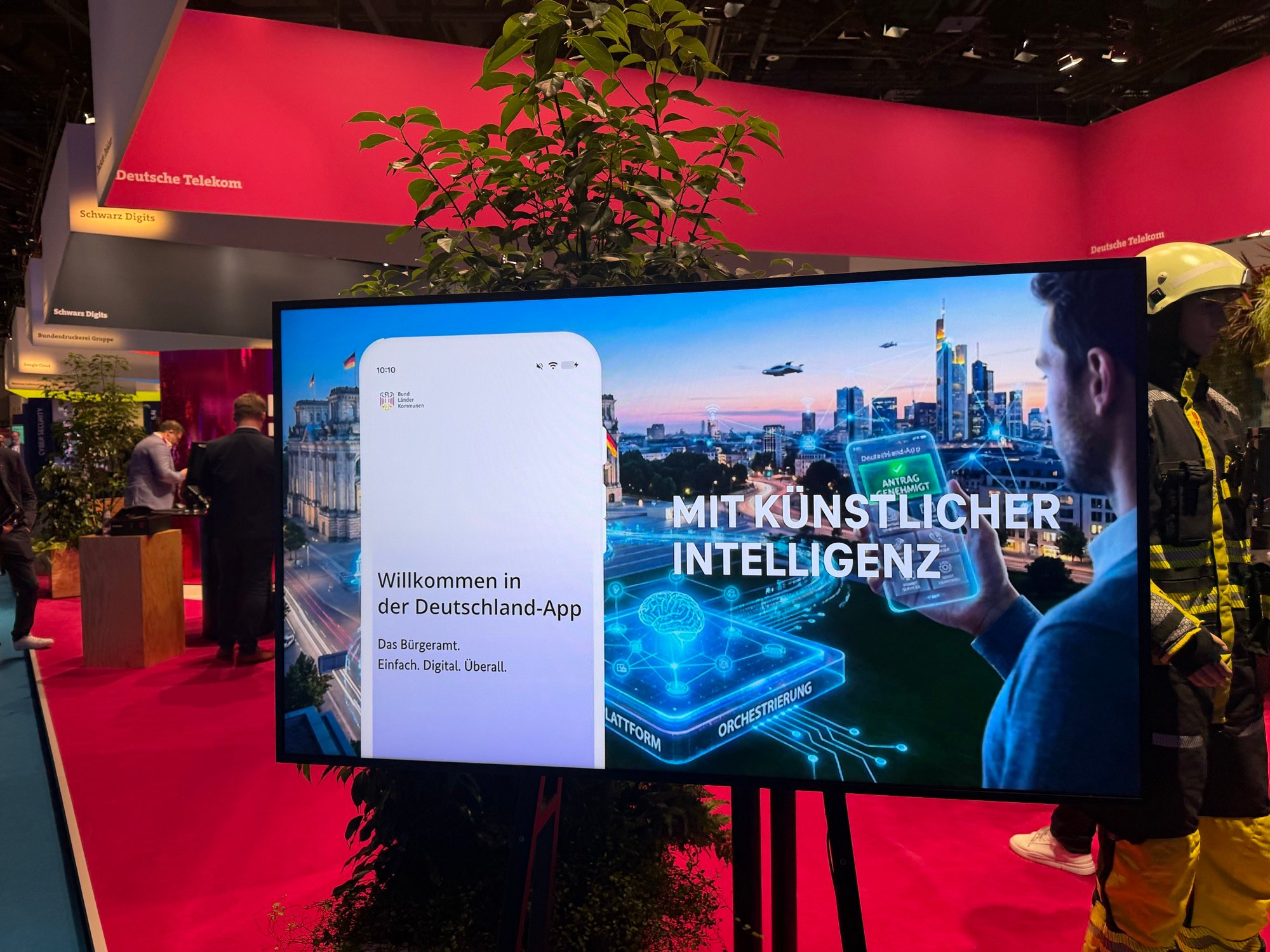

Smart Cities and Municipal Innovation
SCCON also provided an opportunity to explore how German cities and municipalities are approaching digital transformation.
Across the exhibition, we encountered demonstrations covering digital citizen services, connected municipal platforms and AI-assisted information access.
One example was the AI assistant demonstrated by Smart City Projekt Jena, illustrating how conversational interfaces are being explored as a way of making municipal information more accessible.
We also exchanged ideas with GovTech startups developing solutions for specific challenges faced by public administrations and municipalities.
For Cognivox Labs, these discussions highlighted the importance of connecting software platforms, existing data sources and practical user needs when developing digital services.
Smart city development is not simply about introducing new technology. The underlying systems must be interoperable, maintainable and designed around the actual processes they are intended to support.

AI Infrastructure and Digital Sovereignty
Digital sovereignty was another important subject throughout our participation.
We encountered providers presenting different approaches to AI deployment, including EU-hosted access to commercial models from OpenAI and Anthropic.
These approaches provide organisations with additional deployment options, while raising broader questions about data control, model operation, infrastructure dependencies and long-term flexibility.
For organisations handling sensitive information, choosing an AI solution requires evaluating more than the model's capabilities or the physical location of its servers.
This connects directly with an area Cognivox Labs is focusing on: deploying open-weight LLMs on German infrastructure, with options for private deployments, organisation-specific fine-tuning and integration with internal knowledge systems through RAG.
These approaches can provide organisations with greater control over model deployment and infrastructure, depending on their technical and operational requirements.
Local hosting alone does not guarantee data security. Access controls, system architecture, monitoring, infrastructure management and appropriate operational safeguards remain essential.
We also had a useful discussion with secunet about secure cloud and GPU infrastructure, exploring practical infrastructure considerations for these types of AI deployments.
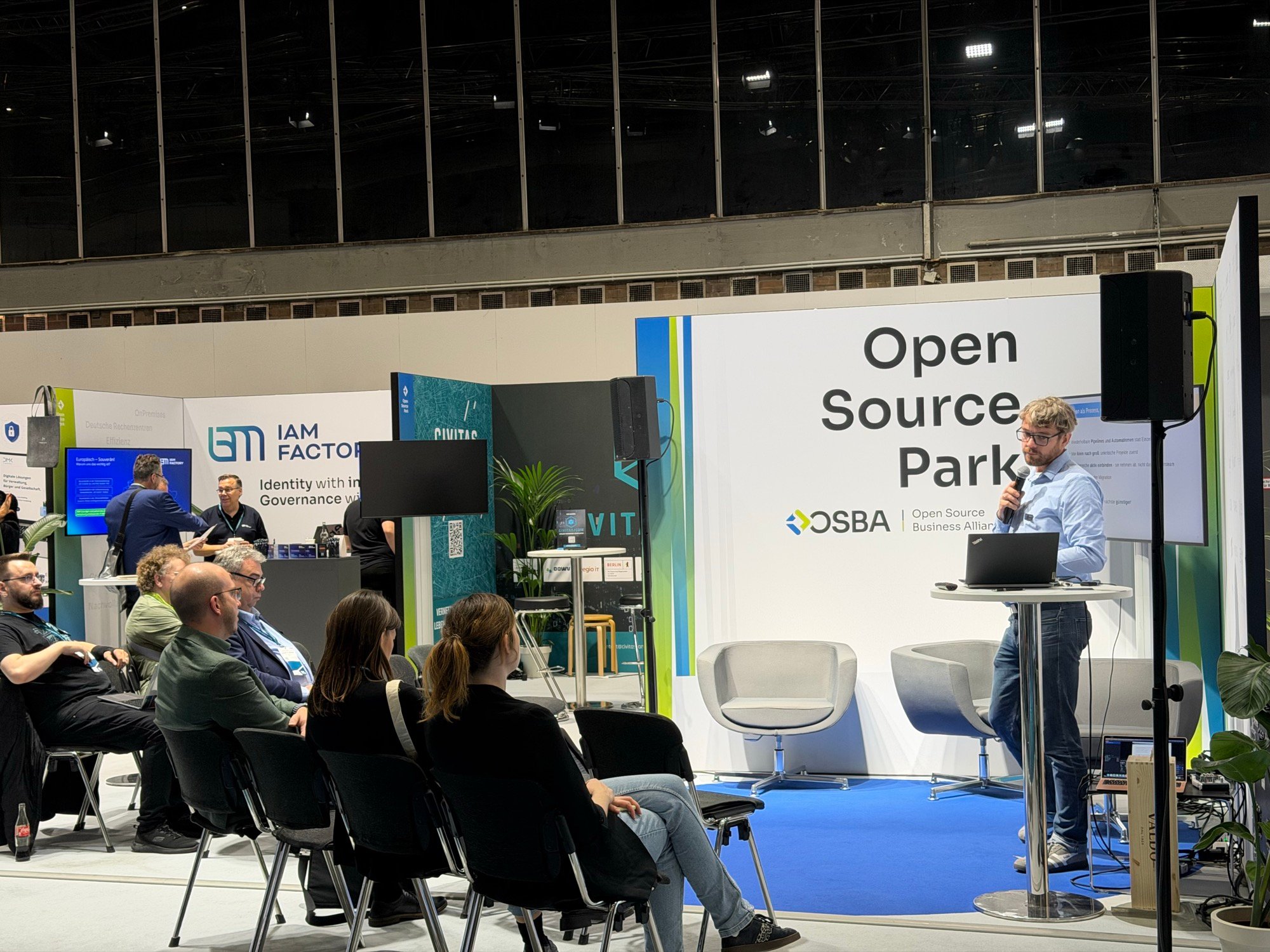
From AI Models to Reliable Digital Systems
A key perspective reinforced through SCCON is that successful AI adoption requires careful consideration of the systems surrounding the model itself.
Organisations need to understand how their information is structured, how existing applications exchange data, which processes can benefit from AI, and what level of infrastructure and model control their requirements demand.
These considerations are relevant not only to public administration but also to businesses evaluating how AI can be integrated into their existing operations.
They will continue to inform our engineering direction at Cognivox Labs, particularly our work around custom software, RAG-based knowledge systems, secure AI deployments and organisation-specific LLM solutions.
We thank the SCCON organisers and everyone who took the time to exchange ideas with us in Berlin.